Market Volatility: Geopolitics, Oil, and Your Portfolio
By ClaritX Research Team ·
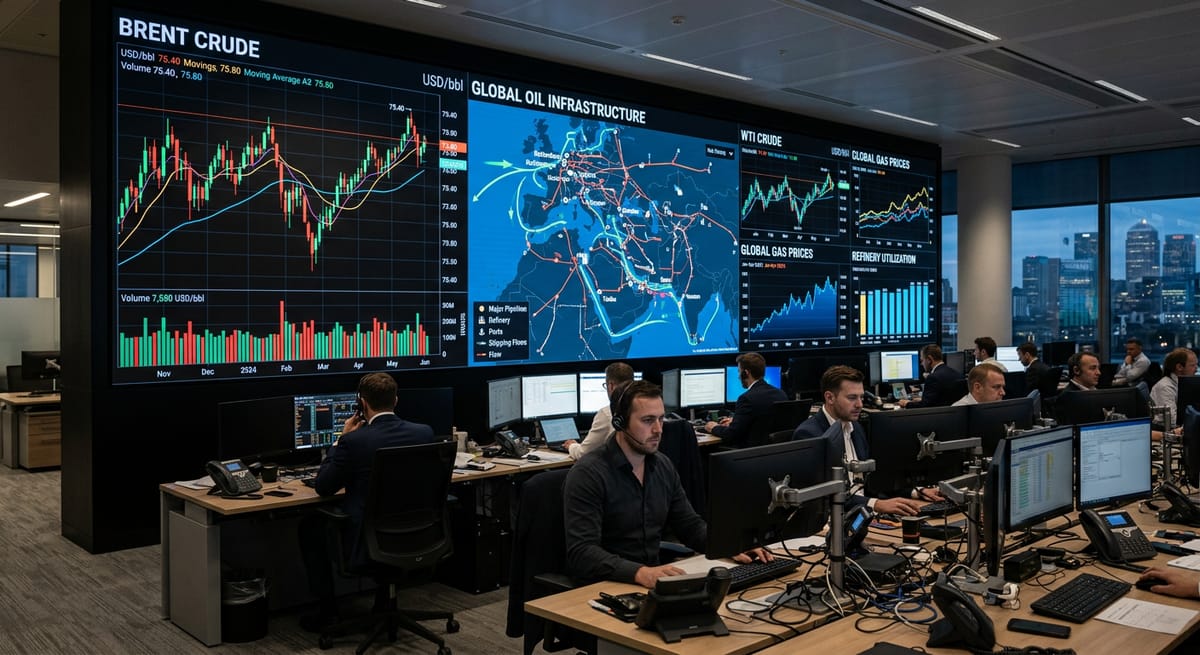
What is market volatility? It represents the unpredictable price fluctuations in financial markets, often triggered by geopolitical shocks. According to CBOE data, the VIX Index spiked above 31.05 in March 2026 amid Middle East tensions. This article explores how global conflicts disrupt oil supplies, drive inflation, and provide actionable strategies to protect your investment portfolio.
What Is Market Volatility and Why Does It Matter?
Market volatility measures the rate and magnitude of price changes for financial assets over a specific period. During times of global stability, asset prices typically follow predictable trends based on corporate earnings and economic growth. However, sudden geopolitical shocks disrupt this equilibrium, causing violent price swings as investors rush to reprice risk. Volatility matters because it directly impacts investor psychology, often leading to panic selling or irrational exuberance. For example, during the April 2026 market disruptions tied to the Iran conflict, the CBOE VIX Volatility Index—a primary gauge of market fear—surged past 31.05 before retreating. High volatility environments erode short-term portfolio values but also create compelling entry points for disciplined investors. Understanding these fluctuations allows market participants to separate transient geopolitical noise from permanent capital impairment. By maintaining a long-term perspective and utilizing hedging strategies, investors can transform periods of extreme market volatility from a source of anxiety into a tactical opportunity for wealth accumulation.
How Do Geopolitical Shocks Impact Global Oil Prices?
Geopolitical shocks drastically impact global oil prices by threatening the physical infrastructure and shipping routes necessary for energy distribution. When conflicts erupt in major oil-producing regions, the immediate threat of supply disruption forces energy traders to price in a geopolitical risk premium. This premium reflects the worst-case scenarios of total supply loss. According to the U.S. Energy Information Administration (EIA, April 2026), the closure of critical chokepoints like the Strait of Hormuz led to an estimated 7.5 million barrels per day of crude oil production being shut in during March 2026. This sudden removal of supply creates an acute imbalance against steady global demand, driving prices upward instantly. As a result, Brent crude futures surged to an average of $103 per barrel in March 2026. Because energy markets are highly financialized, algorithmic trading and speculative positioning often exacerbate these price moves, turning regional diplomatic crises into global macroeconomic events that significantly influence both transportation costs and industrial input expenses worldwide.
Why Did Brent Crude Prices Spike in Early 2026?
Brent crude prices spiked dramatically in early 2026 due to an unprecedented convergence of Middle Eastern geopolitical tensions and direct threats to the Strait of Hormuz. As one of the world's most critical maritime chokepoints, the Strait facilitates the transit of roughly 20 million barrels of crude and refined products daily. When regional conflict involving Iran effectively halted shipping traffic in March 2026, energy markets faced an immediate supply crisis. Trading Economics data from April 22, 2026, highlights that Brent crude maintained elevated levels near $98.35 per barrel as ceasefire negotiations repeatedly stalled. The spike was intensified by the sudden depletion of global oil inventories, which had been previously balanced. Bank of America analysts (March 2026) noted that the disruption erased nearly 200 million barrels of crude from the global market. This massive supply shock, combined with the lack of sufficient alternative pipeline routes to the Red Sea, created a severe bottleneck that rapidly drove global energy prices to multi-year highs.
2026 Market Disruption Metrics
| Market Metric | February 2026 | March 2026 | Mid-April 2026 | Primary Driver |
|---|---|---|---|---|
| Brent Crude Oil | $71.00 / bbl | $103.00 / bbl | $98.35 / bbl | Middle East Conflict & Hormuz Closure |
| Headline US CPI (YoY) | 2.40% | 3.30% | Pending Data | 12.5% Surge in the Energy Index |
| Core US CPI (YoY) | 2.50% | 2.60% | Pending Data | Stable Services, Excludes Energy |
| VIX Index (Peak) | 13.50 | 31.05 | 18.87 | Geopolitical Risk & Speculative Fear |
How Do Rising Energy Costs Drive Headline Inflation?
Rising energy costs drive headline inflation by directly increasing the prices consumers pay for gasoline, electricity, and heating, while simultaneously raising production costs for businesses. Energy acts as a foundational input for virtually every sector of the global economy, meaning its price fluctuations cascade rapidly through the supply chain. When businesses face higher transportation and manufacturing costs, they pass these expenses onto consumers through higher retail prices. According to the U.S. Bureau of Labor Statistics (April 2026), headline Consumer Price Index (CPI) inflation jumped to 3.3% year-over-year in March 2026. This acceleration was overwhelmingly driven by a staggering 12.5% annual increase in the energy index, with gasoline prices alone surging 18.9%. Because headline inflation includes these volatile energy components, it often paints a startling picture of consumer purchasing power erosion during geopolitical crises. Consequently, prolonged spikes in crude oil prices act essentially as a regressive tax on households, reducing discretionary income and potentially slowing broader consumer spending.
What Does Core CPI Tell Us About Underlying Inflation?
Core CPI provides a clearer picture of underlying long-term inflation trends by explicitly excluding highly volatile food and energy prices from its calculation. While geopolitical shocks can send headline inflation soaring through gasoline spikes, these movements are often temporary and heavily dependent on external events rather than structural economic imbalances. Core CPI helps economists and policymakers determine whether price increases have deeply embedded themselves into the service sectors and labor markets. The U.S. Bureau of Labor Statistics reported in April 2026 that while headline inflation hit 3.3%, core CPI remained remarkably steady at 2.6% year-over-year for March 2026. This divergence is crucial; it indicates that the broader economy was not necessarily overheating, despite the severe energy shock caused by the Iran conflict. Goldman Sachs (April 2026) projections further support this, forecasting that core Personal Consumption Expenditures (PCE) inflation will continue to cool down to 2.5% by the end of 2026, suggesting that the underlying inflation foundation remains relatively stable.
How Does the VIX Index Measure Market Fear and Volatility?
The CBOE Volatility Index, commonly known as the VIX, measures the stock market's expectation of 30-day forward-looking volatility based on S&P 500 index options. Often referred to as the fear gauge, the VIX tracks how much investors are willing to pay for options contracts to protect their portfolios against sudden market downturns. A rising VIX indicates growing anxiety and a consensus that the market will experience significant price swings, whereas a low VIX suggests complacency and expected stability. During the geopolitical escalation in March 2026, CBOE data revealed that the VIX spiked to a peak above 31.05 as investors rushed to hedge against the unpredictable outcomes of the Middle East conflict. However, as the initial shock was absorbed and robust corporate earnings emerged, the index eased to 18.87 by April 20, 2026. Understanding the VIX is critical for investors, as it provides quantitative insight into market sentiment, helping them gauge whether current asset pricing reflects rational fundamentals or panic-driven emotion.
What Are the Broader Commodity Impacts of the Iran Conflict?
The Iran conflict’s broader commodity impacts extend far beyond crude oil, triggering synchronized disruptions across global agricultural, metals, and natural gas markets. Geopolitical shocks in the Middle East disrupt vital maritime logistics, forcing shipping vessels to reroute, which exponentially increases freight rates and delays deliveries. This logistical nightmare translates into higher input costs across multiple industries. Oxford Economics (April 2026) reported that more than two-thirds of all commodities are expected to record price increases throughout 2026 as a direct result of these disruptions. For example, natural gas markets experienced a severe shock due to the shutdown of Qatari LNG exports, driving sharp price hikes in Europe. Furthermore, elevated energy prices increase the cost of fertilizers and agricultural machinery fuels. This subsequently drives up global food prices, which are forecast to rise by around 6% in 2026. The interconnected nature of global commodities means that a regional military conflict effectively exports inflation across the entire global supply chain.
How Do Federal Reserve Policies Respond to Energy Shocks?
Federal Reserve policies respond to energy shocks with cautious pragmatism, balancing the need to control inflation against the risk of triggering an economic recession. Central banks historically look past temporary spikes in headline inflation caused by geopolitical energy disruptions, focusing instead on core inflation metrics. If the Federal Reserve aggressively raises interest rates to combat an oil price spike, they risk destroying demand and plunging the economy into a deep recession, especially since monetary policy cannot drill more oil or resolve overseas wars. The IMF’s World Economic Outlook (April 2026) highlighted that elevated energy prices already act as a negative shock to global growth, tightening financial conditions organically. Therefore, the Fed closely monitors whether high energy costs are bleeding into long-term consumer inflation expectations and wage demands. In early 2026, despite gasoline prices driving headline CPI to 3.3%, the Fed maintained a measured approach, acknowledging that core CPI remained stable at 2.6%, thus avoiding premature monetary tightening.
What Are the Best Safe Haven Assets During Geopolitical Crises?
The best safe haven assets during geopolitical crises traditionally include gold, U.S. Treasury bonds, the U.S. dollar, and defensive sector equities. When sudden conflicts erupt, investors aggressively pivot away from risk-heavy growth stocks and seek assets that possess intrinsic value or government backing. Gold is historically prized because it carries no counterparty risk and serves as a hedge against the fiat currency devaluation that often accompanies wartime deficit spending. Oxford Economics (April 2026) highlighted that gold remains a highly supported asset amid the 2026 Iran conflict, driven by expectations of medium-term central bank reserve diversification. U.S. Treasuries also experience significant capital inflows as investors accept lower yields in exchange for the absolute security of the American government. Additionally, the U.S. dollar frequently strengthens during these periods due to its status as the world's primary reserve currency. Allocating capital to these safe haven assets helps stabilize portfolio volatility, providing a crucial buffer when global equity markets suffer sudden, unpredictable geopolitical drawdowns.
How Can You Protect Your Portfolio Against Market Volatility?
You can protect your portfolio against market volatility by implementing rigorous asset diversification, maintaining adequate cash reserves, and utilizing strategic options hedging. Defensive mechanisms must be established before a crisis hits to help investors navigate periods of extreme market volatility with confidence rather than reacting emotionally to breaking news headlines. Consider these core strategies:
- Diversify Across Asset Classes: Combine equities, fixed income, and commodities to limit sector-specific downside during geopolitical shocks.
- Maintain Adequate Cash Reserves: Ensure you have enough liquidity to avoid forced selling during market corrections and deploy capital at depressed valuations.
- Incorporate Options Hedging: Use protective put contracts on major indices like the S&P 500 to act as insurance against severe market declines.
- Overweight Defensive Sectors: Shift marginal allocations toward utilities, healthcare, and energy producers that benefit from inflationary pressures.
By proactively employing these tactics, you transform unpredictable geopolitical risks into a structured framework that preserves capital while remaining positioned for the inevitable market recovery.
Should Investors Adjust Their Asset Allocation During Wars?
Investors should adjust their asset allocation during wars only if their current portfolio structure violates their long-term risk tolerance, rather than attempting to time the market based on daily news cycles. War creates immense short-term volatility, but historical data overwhelmingly demonstrates that markets eventually adapt to geopolitical realities. Making drastic allocation changes, such as moving entirely to cash during a conflict, often results in locking in temporary losses and missing the subsequent, inevitable recovery rebound. However, tactical, marginal adjustments are entirely prudent. For instance, in April 2026, as the Middle East conflict disrupted global supply chains, financial advisors recommended slightly overweighting the energy and defense sectors to capture the geopolitical risk premium. Simultaneously, reducing exposure to highly leveraged companies sensitive to inflation provided a safer baseline. Ultimately, successful wartime investing requires rebalancing back to your target asset allocation, ensuring that your portfolio remains aligned with your fundamental financial goals rather than the unpredictable outcome of overseas military engagements.
Can Energy Sector Stocks Hedge Against Inflation Risks?
Energy sector stocks act as a highly effective hedge against inflation risks, particularly when that inflation is driven by supply-side geopolitical shocks. When crude oil prices surge, the profit margins of exploration, production, and refining companies typically expand dramatically. Because their revenues are directly tied to the underlying commodity price, these equities often appreciate in value precisely when the rest of the broader market is struggling with elevated input costs. Bank of America (March 2026) projected Brent crude could average $77.50 per barrel in 2026 due to Strait of Hormuz disruptions, creating a highly profitable environment for energy producers. By holding a basket of high-quality energy stocks or sector-specific ETFs, investors can offset the purchasing power erosion impacting the consumer segments of their portfolios. Furthermore, energy companies frequently return this excess cash flow to shareholders through robust dividend payments and stock buybacks, offering a tangible, compounding defense against the corrosive effects of persistent macroeconomic inflation and wartime volatility.
How Do Long-Term Supply Disruptions Change Global Trade?
Long-term supply disruptions fundamentally change global trade by accelerating the transition from optimized just-in-time supply chains to resilient just-in-case inventory models. When geopolitical conflicts like the 2026 Strait of Hormuz closure demonstrate the fragility of global shipping routes, multinational corporations are forced to permanently alter their operational strategies. Companies begin prioritizing supply chain security over pure cost efficiency, leading to the massive nearshoring or friendshoring of manufacturing facilities back to politically stable regions. The International Monetary Fund (April 2026) warned that such geopolitical fragmentation threatens macroeconomic stability by structurally increasing the baseline costs of raw materials and finished goods. Additionally, long-term disruptions force nations to aggressively diversify their energy dependence, heavily subsidizing the rapid development of domestic renewable energy infrastructure and local fossil fuel production. Ultimately, these geopolitical shocks rewrite global trade agreements, shifting the world economy away from hyper-globalization toward regionalized trading blocs that prioritize national security and resource independence above all else.
Why Is Staying Invested Critical During Market Volatility?
Staying invested is critical during market volatility because timing the market's exact top or bottom is virtually impossible, and missing just a few of the market's best performing days can permanently impair long-term wealth generation. Geopolitical shocks naturally induce panic, tempting investors to sell assets and retreat to cash. However, historical stock market data consistently reveals that the most explosive recovery rallies frequently occur immediately following periods of peak market fear. For example, after the CBOE VIX Volatility Index spiked in March 2026 due to the Iran conflict, the markets quickly normalized as corporate earnings proved resilient, rewarding those who held their positions. Liquidating a portfolio during a crisis locks in temporary paper losses and strips the investor of future compounding returns. A disciplined strategy focuses on the intrinsic value of the underlying businesses rather than temporary geopolitical headwinds. By remaining fully invested through volatility, you harness the market's historical upward bias, ensuring robust capital appreciation across full economic cycles.
Related ClaritX Tools
→ Run a full 9-perspective AI analysis on any stock → AI Stock Rankings for 1,000+ assets → Portfolio Simulator (risk-profile based)
Disclaimer: This content is for educational and informational purposes only and does not constitute investment advice. Always consult a licensed financial professional before making any investment decisions.
Sources
How this content was created
This article was created by the ClaritX Research Engine — an AI system that analyzes and cross-checks information from reliable, named sources (listed above). Published . Found an error? Report it — see our editorial policy and corrections process. Educational content only — not investment advice (full disclaimer).