Market Pullback 2026: Oil, Yields, and Tech Portfolios
By ClaritX Research Team ·
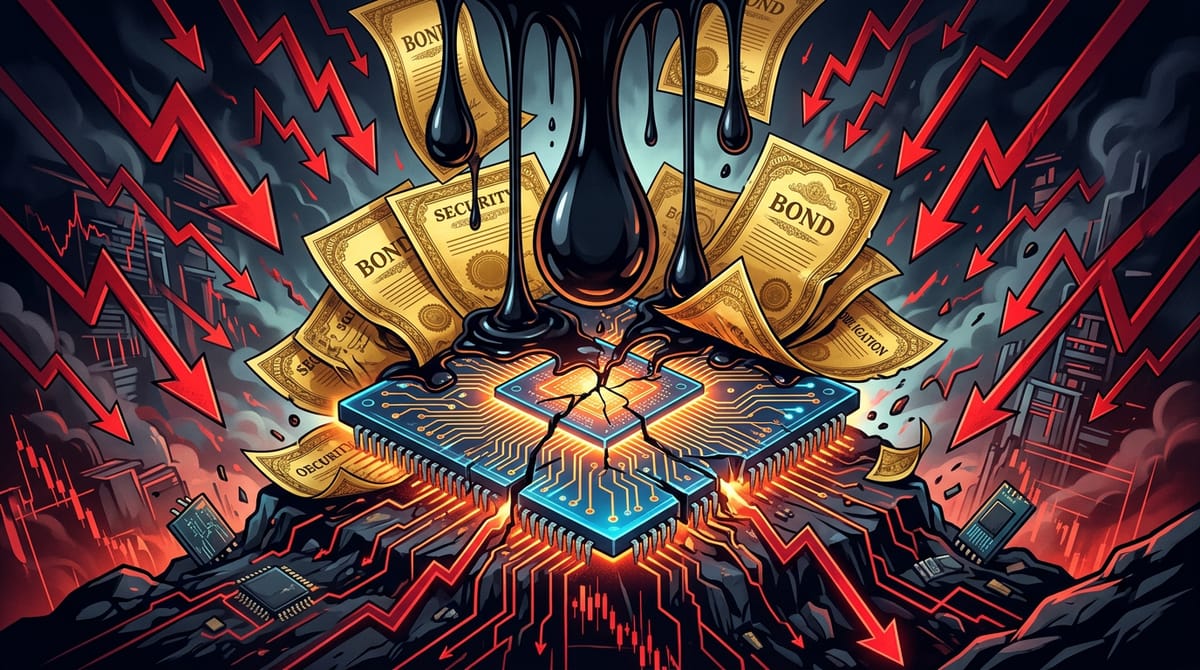
What is a market pullback? A market pullback is a temporary decline in asset prices, typically between 5% and 10%, driven by shifting macroeconomic conditions. As of mid-May 2026, the US 10-year Treasury yield surged to 4.59%, triggering a repricing in equities. This article explores how surging crude oil and rising bond yields are impacting high-valuation tech portfolios today.
What Is Causing the Current Market Pullback?
The recent market pullback is primarily driven by a sudden convergence of geopolitical shocks and macroeconomic tightening. According to data from Bloomberg (May 2026), the Nasdaq-100 index experienced a sharp 1.7% drop on May 15, 2026, effectively dragging the broader S&P 500 down by 1.2%. This decline was not sparked by fundamental earnings failures, but rather by rapidly deteriorating risk sentiment linked to the Middle East. Rising hostilities in the Strait of Hormuz have drastically reduced global oil shipping flows, creating a severe supply bottleneck. Consequently, energy costs have spiked, stalling the disinflationary progress that the Federal Reserve had been relying on. When inflation metrics run hotter than anticipated, central banks are forced to maintain restrictive monetary policies for longer periods. This high-interest-rate environment directly pressures asset valuations, particularly in growth-heavy indices that rely on cheap capital. This confluence of sticky inflation, soaring energy premiums, and elevated interest rates creates a classic catalyst for a swift, comprehensive market pullback.
How Do Surging Oil Prices Impact the Global Economy?
Surging oil prices act as a regressive tax on the global economy, directly eroding consumer purchasing power and inflating corporate operating expenses. According to Trading Economics (May 2026), WTI crude oil prices spiked to roughly $106 per barrel, representing an 11% weekly gain as supply disruptions intensified. When the cost of crude oil rises this aggressively, it immediately translates into higher transportation, manufacturing, and logistics costs across nearly every industrial sector. For the average consumer, this means spending a larger percentage of disposable income on gasoline and basic utilities, which subsequently reduces discretionary spending. This dynamic creates a vicious cycle where retail sales decline just as businesses face margin compression from elevated input costs. Furthermore, sustained oil shocks historically force central banks into a difficult corner, requiring them to fight supply-driven inflation with demand-crushing interest rate hikes. As a result, surging crude prices consistently operate as a leading indicator for broader macroeconomic deceleration and localized market pullbacks.
Why Are Rising Bond Yields a Threat to Equities?
Rising bond yields present a fundamental threat to equities because they increase the risk-free rate of return, essentially giving investors a safer alternative to volatile stock markets. As of May 15, 2026, the US 10-year Treasury yield hit 4.59%, marking its highest level since early 2025, according to Morningstar data. When government bonds offer guaranteed returns nearing 5%, institutional capital naturally rotates out of riskier assets and into fixed income. This asset allocation shift drains liquidity from the stock market. Moreover, rising yields directly increase corporate borrowing costs. Companies that rely on debt to fund operations, stock buybacks, or dividend payments suddenly face substantially higher interest expenses, which systematically degrades their net profit margins. In financial modeling, a higher yield also increases the discount rate used to calculate the present value of future corporate earnings. Therefore, as bond yields climb, the mathematical valuation of almost every publicly traded equity is forcibly adjusted downward, triggering broad portfolio corrections.
How Does a High US 10-Year Treasury Yield Affect Tech Valuations?
A high US 10-year Treasury yield disproportionately damages tech valuations because technology companies are traditionally valued on their distant future cash flows. According to The Wall Street Journal (May 2026), the Nasdaq-100 was trading at a lofty 38.3 times trailing earnings just before the recent market pullback. Growth companies rely heavily on the assumption that their earnings will expand exponentially in the coming years. However, when the 10-year Treasury yield climbs to 4.59%, analysts must apply a higher discount rate to those future earnings in their discounted cash flow models. This mathematical adjustment drastically reduces the present value of the company, even if the underlying business model remains flawlessly intact. Consequently, speculative software and artificial intelligence stocks that trade at premium multiples experience the most severe price contractions. Investors simply become unwilling to pay massive premiums for future promises when they can secure a robust, risk-free yield from the United States government today, sparking targeted tech sector sell-offs.
Why Are Tech Stocks So Vulnerable to Inflation Pressures?
Tech stocks are uniquely vulnerable to inflation pressures because persistent inflation directly undermines the accommodative monetary policies that fuel technology sector expansion. When the May 2026 Consumer Price Index registered a sticky 3.8%, as reported by Investing.com, markets instantly priced out hopes for imminent Federal Reserve rate cuts. Technology firms are highly capital-intensive, requiring massive ongoing investments in research, development, and infrastructure—such as the multibillion-dollar data centers required for artificial intelligence processing. Inflation increases the cost of these raw materials, physical components, and highly specialized labor. Furthermore, because tech stocks are characterized as long-duration assets, they are highly sensitive to the interest rate hikes utilized to combat inflation. As the cost of servicing corporate debt increases, tech companies are forced to redirect capital away from innovation and toward interest payments. This dynamic stifles the aggressive revenue growth rates that investors demand, ultimately leading to steep valuation downgrades during periods of prolonged macroeconomic price instability.
How Did the Nasdaq 100 Perform Leading Up to the May 2026 Correction?
Leading up to the May 2026 correction, the Nasdaq 100 exhibited a historic, near-vertical rally driven by relentless artificial intelligence optimism. According to CME Group (May 2026), Nasdaq-100 futures hit a record high of 29,390 on May 11, following exceptional earnings reports from major semiconductor and cloud computing giants. The index surged roughly 15% to 17% over a six-week period, massively outperforming both the Dow Jones Industrial Average and the Russell 2000. Market breadth was heavily skewed, with a handful of mega-cap technology firms responsible for the vast majority of the gains. The technical indicators became severely overextended, with the index trading almost 6% above its 20-day moving average. This priced-for-perfection environment left the market incredibly fragile. When geopolitical tensions spiked and inflation data printed hotter than expected just days later, the overbought index was perfectly primed for a swift, aggressive pullback, resulting in the sudden 1.7% single-day drop observed on May 15.
What Role Does the Strait of Hormuz Conflict Play in Crude Oil Prices?
The ongoing conflict surrounding the Strait of Hormuz plays a foundational role in determining current crude oil prices because it serves as the world's critical energy chokepoint. According to Goldman Sachs research (May 2026), the effective closure of the Strait due to US-Iran tensions stranded millions of barrels of crude oil, triggering an immediate global supply shock. Approximately 20% of the world's total oil consumption typically transits through this narrow waterway. When tanker traffic is restricted by military escalation, maritime insurance premiums skyrocket, and shipping companies are forced into massive rerouting delays. This localized geopolitical crisis tightens physical fuel markets exponentially, pushing Brent crude above $106 per barrel. The uncertainty surrounding diplomatic negotiations ensures that a hefty geopolitical risk premium remains baked into every oil contract. Until free and secure navigation is demonstrably restored, the restricted flow through Hormuz will continue to anchor global energy prices at elevated levels, threatening broader economic stability.
How Do Semiconductor and AI Stocks React to Rising Capital Costs?
Semiconductor and artificial intelligence stocks tend to react negatively to rising capital costs, despite their strong fundamental revenue generation. According to MarketPulse data (May 2026), the correlation between the US Semiconductor ETF (SOXX) and the broader Nasdaq 100 stands at an incredibly high 0.95. This means that when bond yields spike and capital becomes expensive, semiconductor stocks drag the entire technology ecosystem downward. Building the physical infrastructure required for AI—fabrication plants, advanced lithography machines, and hyperscale data centers—requires tens of billions of dollars in upfront capital expenditure. When the risk-free rate jumps to 4.59%, the cost of financing these massive infrastructure buildouts increases substantially. Even though companies like Nvidia and Broadcom are reporting record profits, the market heavily discounts their future valuation multiples due to the expensive debt environment. Consequently, rising capital costs force a rapid multiple compression, shifting investor sentiment away from speculative AI growth and back toward mature, cash-flowing value enterprises.
Which Sectors Outperform When Technology Stocks Face a Pullback?
When technology stocks face a pullback driven by high interest rates and surging inflation, defensive and commodity-based sectors typically outperform. According to historical sector analysis from Seeking Alpha (May 2026), energy and financials become primary beneficiaries during these specific macroeconomic rotations. The energy sector thrives because the very catalyst harming the broader market—$106 per barrel crude oil—directly inflates the profit margins of exploration, production, and refining companies. Similarly, the financial sector, particularly traditional banking institutions, often benefits from higher interest rates. When the 10-year Treasury yield climbs to 4.59%, banks can charge significantly higher rates on commercial and consumer loans, effectively widening their net interest margins. Additionally, consumer staples and healthcare sectors tend to absorb fleeing capital, as their dividend yields and inelastic demand provide a safe harbor for nervous investors. By actively rotating capital into these resilient, cash-generating sectors, institutions can effectively insulate their portfolios from the high-beta volatility tearing through the technology landscape.
Asset Comparison: Tech vs. Energy (May 2026)
Here is a comparison of major tech and energy assets during the market pullback:
| Ticker | Asset Name | Sector | Forward P/E | Dividend Yield | 5-Year Return |
|---|---|---|---|---|---|
| QQQ | Invesco QQQ Trust | Technology | 38.3x | 0.58% | +115.4% |
| NVDA | Nvidia Corp. | Semiconductor | 41.0x | 0.02% | +1,250.2% |
| XLE | Energy Select Sector | Energy | 12.4x | 3.40% | +68.5% |
| CVX | Chevron Corp. | Energy | 14.1x | 4.10% | +52.1% |
How Can Investors Hedge Their Tech Portfolios Against Geopolitical Risks?
Investors can hedge their technology portfolios against geopolitical risks by strategically diversifying into non-correlated assets and utilizing targeted options strategies. Based on May 2026 market dynamics, one of the most effective hedges against Middle East instability is direct exposure to domestic energy equities or broad commodity ETFs. Because tech stocks generally suffer when oil prices spike, holding energy stocks creates a natural inverse correlation that stabilizes overall portfolio value. Furthermore, investors can purchase protective put options on major technology indices like the QQQ. This establishes a firm price floor, limiting potential downside losses during sudden market pullbacks without requiring the investor to liquidate their long-term equity positions. Allocating a portion of the portfolio to short-duration Treasury bills currently yielding near 5% also provides robust downside protection. By maintaining ample cash reserves and balancing high-growth artificial intelligence holdings with defensive commodity plays, investors can confidently navigate geopolitical shocks while remaining positioned for eventual market recoveries.
Are We Entering a Structural Bear Market or a Healthy Correction?
Despite the sudden volatility, current data suggests the market is undergoing a healthy correction rather than entering a structural bear market. According to INDmoney financial analysis (May 2026), the underlying earnings of major tech conglomerates remain incredibly robust, differentiating today’s environment from historical bubbles. Mega-cap technology companies are genuinely generating hundreds of billions in free cash flow, supported by relentless corporate spending on artificial intelligence infrastructure. A structural bear market typically requires an imminent economic recession and collapsing corporate earnings. Currently, US retail sales and labor markets continue to demonstrate surprising resilience, signaling that macroeconomic fundamentals remain structurally sound. The recent 1.7% dip in the Nasdaq represents a necessary pressure release following a near-vertical 15% multi-week rally. Markets must occasionally flush out overleveraged speculative capital and reset stretched valuation multiples. Therefore, long-term investors should view this pullback as a standard mean-reversion event, offering strategic entry points rather than signaling an impending, catastrophic financial collapse.
What Metrics Should You Monitor During a High-Yield Environment?
During a high-yield environment, investors must aggressively monitor specific financial metrics that dictate a company's ability to survive expensive capital. According to ClaritX research guidelines (May 2026), the single most critical metric is Free Cash Flow (FCF) yield. Companies generating substantial, unencumbered cash can internally fund their own growth, completely bypassing the penalizing 4.59% borrowing rates of the current bond market. Secondly, investors must evaluate the Debt-to-Equity ratio and specifically analyze the corporate debt maturity schedule. Firms possessing large tranches of debt maturing in 2026 will be forced to refinance at substantially higher interest rates, instantly destroying future profitability. Finally, the Forward Price-to-Earnings (P/E) ratio must be scrutinized in relation to the risk-free rate. Paying 40 times forward earnings is mathematically indefensible when government bonds yield 5%. By prioritizing low-debt, high-FCF enterprises with reasonable valuation multiples, investors can effectively insulate their portfolios from the destructive gravitational pull of rising Treasury yields.
How Can Artificial Intelligence Assist in Navigating Market Volatility?
Artificial intelligence can assist in navigating market volatility by rapidly synthesizing vast amounts of macroeconomic data into actionable, objective investment strategies. Modern AI analytics platforms, such as ClaritX, continuously process real-time variables like the May 2026 Consumer Price Index, fluctuating WTI crude oil prices, and Treasury yield spreads. By eliminating emotional human bias, AI can instantly identify when a tech stock’s valuation has become dangerously decoupled from its intrinsic value due to rising discount rates. Furthermore, predictive machine learning models can stress-test portfolios against thousands of historical market pullbacks, simulating how specific assets will perform if oil reaches $120 per barrel or yields cross 5%. AI can also optimize dynamic hedging strategies, pinpointing the exact moment to rotate capital from overbought semiconductors into defensive energy ETFs. By leveraging these advanced quantitative insights, retail investors can execute institutional-grade risk management, transforming terrifying market volatility into a series of calculated, highly profitable portfolio adjustments.
Actionable Takeaways for Portfolio Protection
- Monitor the 10-Year Yield: Any sustained move above 4.59% mathematically pressures tech valuations; adjust growth exposure accordingly.
- Hedge with Commodities: Utilize energy ETFs like XLE to offset the margin compression caused by $106 WTI crude oil.
- Focus on Free Cash Flow: Prioritize companies capable of self-funding operations without relying on 2026's expensive debt markets.
- Avoid Overextended Multiples: Reduce positions in speculative AI assets trading significantly above historical forward P/E averages.
Related ClaritX Tools
- → Run a full 9-perspective AI analysis on any stock
- → AI Stock Rankings for 1,000+ assets
- → Portfolio Simulator (risk-profile based)
This content is for educational and informational purposes only and does not constitute investment advice. Always consult a licensed financial professional before making any investment decisions.
Sources
How this content was created
This article was created by the ClaritX Research Engine — an AI system that analyzes and cross-checks information from reliable, named sources (listed above). Published . Found an error? Report it — see our editorial policy and corrections process. Educational content only — not investment advice (full disclaimer).