Treasury Bills vs Dividend Stocks: Safe Income in 2026
By ClaritX Research Team ·
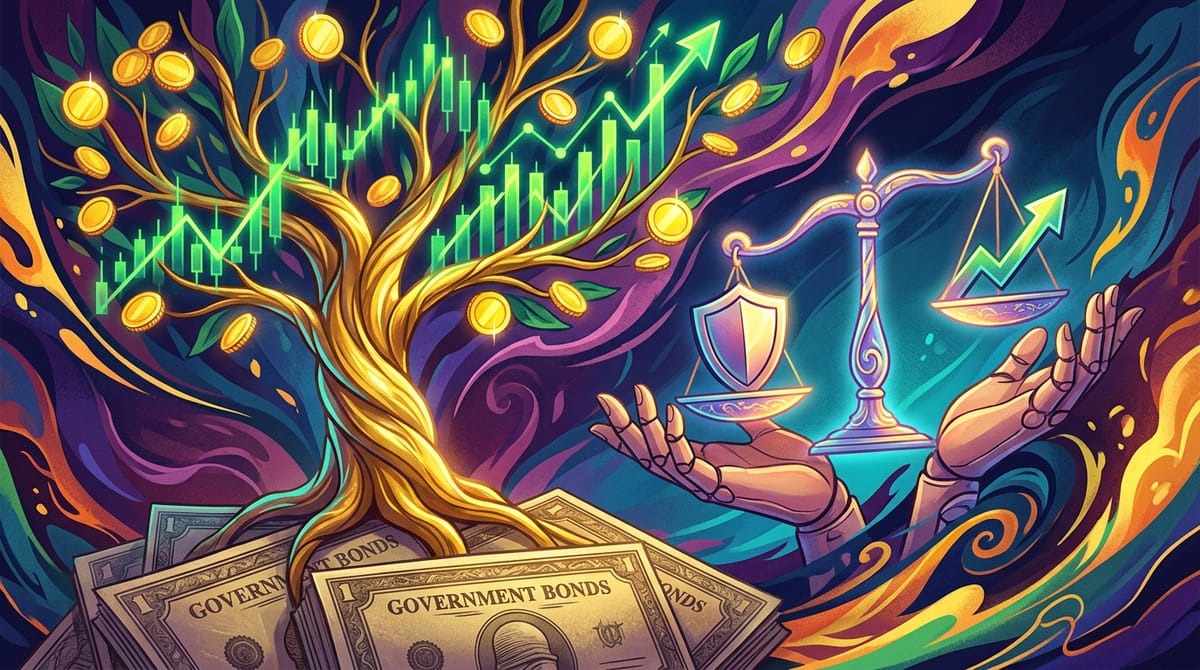
What is the best choice between Treasury Bills and Dividend Stocks for safe income? As of June 2026, the S&P 500 dividend yield sits at a historic low of 1.09%, while 12-month Treasury bills provide a risk-free 3.99%. This guide explores whether to lock in guaranteed government yields or pursue growing payouts from blue-chip stocks.
Key Takeaways
- 12-month T-bills currently yield around 3.99% as of June 2026, offering risk-free returns backed by the U.S. government.
- The S&P 500 dividend yield has fallen to an all-time low of 1.09%, requiring careful stock selection for income.
- Dividend stocks offer long-term capital appreciation and inflation-beating payout growth, unlike fixed-rate Treasuries.
- The Federal Reserve held rates at 3.50%-3.75% in June 2026, creating a higher-for-longer environment.
What Are the Current Yields for Treasury Bills in 2026?
Treasury bills (T-bills) are short-term debt obligations backed by the United States government, making them virtually risk-free. If you are seeking immediate capital preservation, T-bills are highly attractive right now. According to Forbes Advisor data from mid-June 2026, the one-month Treasury bill yields approximately 3.66%, while the 12-month Treasury bill delivers an annualized return of 3.99%. These rates present a compelling argument for conservative investors looking for guaranteed payouts. Because the U.S. Treasury guarantees these instruments, your principal is entirely protected if held to maturity. Additionally, the interest earned from T-bills is exempt from state and local income taxes, which increases your effective, after-tax yield. When you contrast this with standard savings accounts, T-bills consistently offer a superior hedge against inflation. For retirees or those holding significant cash reserves, locking in a 12-month yield near 4% ensures short-term stability without the price volatility associated with equity markets.
How Do Dividend Stocks Generate Passive Income?
Dividend stocks are equity investments in publicly traded companies that distribute a portion of their earnings back to shareholders. Unlike fixed-income bonds, these payouts are not guaranteed, but they offer the dual advantage of passive cash flow and capital appreciation. When a company grows its profits, it often increases its dividend payout, which protects your purchasing power over time. However, finding good value has become difficult. As reported by GuruFocus in June 2026, the S&P 500 dividend yield has dropped to an all-time low of just 1.09%, largely due to soaring stock prices. This means broad index funds no longer provide substantial income. Instead, income investors must target specific sectors like utilities, consumer staples, or financials to find yields above 3%. While stocks carry market risk and prices can fluctuate wildly, holding high-quality dividend growth companies can generate a rising income stream that easily outpaces inflation over a multi-year horizon.
Before buying any of these assets, run it through a free 9-perspective AI analysis to check the fundamentals, sentiment, and valuation in one place: → Analyze any stock free.
Which High-Yield Dividend Stocks Offer Safe Returns Today?
While the broader market yield is severely depressed, selective stock picking reveals compelling opportunities. Top dividend payers are often found in mature industries with steady cash flows. For example, Forbes (May 2026) highlights AbbVie Inc. (ABBV), a healthcare giant offering a 3.43% forward dividend yield, and Mondelēz International (MDLZ) providing a solid 3.25%. Regional banks also offer stability; United Bankshares (UBSI) maintains a 3.36% yield with a highly sustainable 42% payout ratio. When evaluating these options, you must analyze a company's payout ratio and earnings growth rather than just chasing the highest percentage. A yield over 6% might signal underlying financial distress rather than generosity. By focusing on established entities with long track records of payout growth, you can secure reliable income that competes directly with government bonds. Always prioritize cash flow stability and balance sheet health when building a dedicated passive income portfolio. This discipline is the absolute key to achieving long-term financial independence.
How Does the Federal Reserve Impact Your Income Strategy?
The Federal Reserve directly dictates the macroeconomic environment, significantly influencing both stock valuations and bond yields. According to LendingTree and Trading Economics (June 2026), new Fed Chair Kevin Warsh held the target federal funds rate steady at 3.50% to 3.75%. Persistent core PCE inflation, resting near 3.6%, forced policymakers to abandon earlier hopes of aggressive rate cuts. For income investors, this hawkish pause creates a higher-for-longer environment. When rates remain elevated, Treasury bills continue to offer strong, risk-free returns near 4%. Simultaneously, high interest rates can pressure dividend stocks by making borrowing more expensive for companies and providing investors with a safer alternative. If you hold dividend stocks, a prolonged high-rate environment means you must demand higher yields to justify the added equity risk. Monitoring the Federal Open Market Committee's decisions is absolutely crucial for perfectly timing your transition between fixed-income assets and equities. You should review their statements carefully.
Should You Choose T-Bills or Dividend Stocks Right Now?
Deciding between Treasury bills and dividend stocks ultimately depends on your time horizon and tolerance for market volatility. If you need capital within the next 12 to 24 months, Treasury bills are the undisputed winner. With 12-month T-bills offering 3.99% as of June 2026, you lock in a guaranteed return with zero principal risk. However, if you are investing for a retirement that is a decade away, relying solely on T-bills exposes you to reinvestment risk when rates eventually fall. Dividend stocks, despite their current historical low average yield of 1.09% on the S&P 500, offer something government debt cannot: a growing payout and capital appreciation. The optimal strategy in 2026 is a blended approach. Use T-bills for your emergency fund and short-term income needs, while deploying long-term capital into high-quality, dividend-growing equities to ensure your wealth outpaces living costs over the next decade. Diversification remains the best protection available.
What Are the Key Risks of Investing in Treasury Bills?
While Treasury bills are widely considered one of the safest investments in the global financial system, they are not entirely immune to economic risks. The most significant threat to T-bill investors in 2026 is reinvestment risk. If the Federal Reserve ultimately decides to cut interest rates later this year or in 2027, the current 12-month yield of 3.99% will vanish. When your bill matures, you will be forced to reinvest your principal at substantially lower prevailing rates. Additionally, T-bills struggle to generate real wealth after adjusting for inflation and taxes. With Core PCE inflation running at roughly 3.6% in early 2026, a 3.99% nominal return leaves you with razor-thin real purchasing power gains. Finally, because these are short-term instruments, they provide no opportunity for capital appreciation. You will only ever receive your initial principal back plus the agreed-upon interest, capping your upside entirely regardless of economic booms.
What Are the Hidden Dangers of High-Yield Dividend Stocks?
Chasing the highest possible dividend yield is a common trap that can severely damage your portfolio. When a stock's yield spikes dramatically, it is usually because the underlying share price has collapsed, signaling intense market skepticism. This phenomenon is known as a yield trap. If a company is paying out more in dividends than it earns in free cash flow, the payout is unsustainable. Eventually, the board of directors will be forced to slash the dividend, triggering a massive sell-off and permanent capital loss. Investors must carefully evaluate a company's payout ratio—the percentage of earnings paid as dividends. A healthy payout ratio typically sits below 60%, leaving the business with ample retained earnings to reinvest in future growth or weather economic downturns. Furthermore, sectors traditionally known for high yields, such as real estate and regional banking, carry intense sensitivity to fluctuating interest rates and macroeconomic stress. Avoid these risks by remaining highly selective.
How Does Inflation Affect Fixed Income vs Equity Yields?
Inflation acts as a silent tax that steadily erodes the purchasing power of your investment income over time. For fixed-income assets like Treasury bills, inflation is a direct adversary. If you lock in a 12-month T-bill at 3.99%, but inflation climbs above 4%, your real rate of return becomes negative. The interest payments you receive will buy fewer goods and services than when you made the initial investment. In contrast, high-quality dividend stocks function as a robust natural hedge against rising consumer prices. Companies with strong pricing power can pass their increased operational costs directly onto their customers, thereby protecting their profit margins. As these corporate earnings grow nominally alongside inflation, the companies typically raise their dividend payouts to match. Consequently, your passive income stream increases over time, preserving your true purchasing power and providing a dynamic defense that fixed-rate government securities simply cannot match. This dynamic growth is invaluable today.
Why Have Broad Market Dividend Yields Reached Historic Lows?
The primary reason broad market dividend yields have compressed so dramatically is the explosive, sustained rise in underlying stock prices. As reported by GuruFocus in June 2026, the S&P 500 dividend yield rests at an astonishing 1.09%, dipping below the previous modern low set during the 2000 dot-com bubble. Because dividend yield is calculated by dividing the annual payout by the current share price, surging equity markets mathematically drive yields downward, even if companies continue to raise their actual cash disbursements. Furthermore, modern corporate management increasingly favors executing massive stock buybacks rather than distributing taxable cash dividends to shareholders. Buybacks reduce the outstanding share count, artificially inflating earnings per share and driving further price appreciation without triggering immediate tax liabilities for investors. This structural shift in how companies return capital to shareholders means traditional index funds are no longer viable instruments for generating substantial, immediate passive cash flow. Individual stock selection is now absolutely necessary.
| Asset Name | Asset Category | Current Yield (June 2026) | Risk Level | Inflation Protection |
|---|---|---|---|---|
| 12-Month Treasury Bill | Government Debt | 3.99% | Very Low | Poor |
| S&P 500 Index | Broad Equity Market | 1.09% | Medium | Moderate |
| AbbVie Inc. (ABBV) | Healthcare Dividend Stock | 3.43% | Medium | High |
| Mondelēz Int. (MDLZ) | Consumer Staples Stock | 3.25% | Medium | High |
| United Bankshares (UBSI) | Regional Bank Stock | 3.36% | Medium-High | Moderate |
Data sourced from GuruFocus, Forbes, and U.S. Treasury data as of June 2026.
How Should You Allocate Between T-Bills and Dividend Stocks?
Creating a resilient income portfolio requires strategically balancing the immediate safety of government debt with the long-term growth of equities. A highly effective approach is the bucket strategy, which segments your capital based on your timeline. Place funds you will need within the next one to three years into short-term instruments like 3.66% one-month or 3.99% 12-month Treasury bills. This ensures your near-term obligations are fully funded without exposing you to untimely market crashes. The second bucket, meant for capital you will not touch for five to ten years, should be aggressively deployed into high-quality dividend growth stocks. By focusing on established companies with a long history of annual dividend increases—often called Dividend Aristocrats—you secure a rising income stream that actively fights inflation. This hybrid asset allocation model perfectly marries the absolute sleep-at-night security of T-bills with the necessary wealth-building compounding power of blue-chip corporate equities. Implementing this strategy provides total peace.
What Tax Considerations Impact Your Final Net Yield?
Taxes play a critical role in determining the actual cash you get to keep from your investments. The interest generated by Treasury bills is subject to federal income tax at your ordinary rate, but it is completely exempt from state and local income taxes. For investors residing in high-tax jurisdictions like California or New York, this state tax exemption provides a massive boost to the effective yield. On the other hand, qualified dividends from most U.S. stocks benefit from preferential tax treatment at the federal level. Depending on your overall taxable income bracket, qualified dividends are taxed at 0%, 15%, or a maximum of 20%, which is significantly lower than standard income rates. However, dividend income remains fully taxable at the state level. You must meticulously calculate your after-tax return for both asset classes, ideally holding tax-inefficient assets in tax-advantaged accounts like IRAs to maximize your total net return. Proper tax planning dramatically boosts your wealth.
What Are the Best Actionable Steps for Income Investors in 2026?
Successfully navigating the current financial landscape requires a highly disciplined, proactive approach to asset allocation. To optimize your income portfolio right now, consider implementing these specific, strategic moves to protect your capital:
- Audit Your Cash Reserves: Immediately move any idle cash sitting in zero-yield checking accounts into 1-month or 3-month Treasury bills to capture risk-free yields near 3.66%.
- Evaluate Dividend Sustainability: Screen your current equity holdings for payout ratios exceeding 60%, and consider reallocating capital away from risky, high-yield traps into safer blue-chip stocks.
- Monitor Federal Reserve Communications: Stay acutely aware of Chair Kevin Warsh's upcoming statements regarding the 3.50% to 3.75% federal funds rate to anticipate major market shifts.
- Calculate After-Tax Returns: Compare the state-tax-free benefits of T-bills against the federally advantaged qualified dividend tax rates to uncover your true net yield.
- Leverage Artificial Intelligence: Utilize modern analytical tools to scan the market for undervalued dividend growth opportunities before deploying new capital.
Frequently Asked Questions
Are Treasury bills completely risk-free? Treasury bills are considered risk-free regarding principal loss if held to maturity, as they are backed by the U.S. government. However, they are still exposed to reinvestment risk when rates fall and inflation risk if consumer prices rise faster than the bond's yield.
Why is the S&P 500 dividend yield so low in 2026? The S&P 500 dividend yield has fallen to a historic low of 1.09% primarily because stock prices have surged tremendously. Additionally, modern corporate boards strongly prefer executing stock buybacks to return capital to shareholders rather than distributing highly taxable cash dividends.
Is a 6% dividend yield considered safe today? In the current June 2026 macroeconomic environment, a dividend yield exceeding 6% is highly unusual for stable companies and often signals underlying financial distress. You must thoroughly investigate the company's free cash flow and payout ratio before investing in high-yield assets.
How do interest rates affect dividend stocks? When the Federal Reserve keeps interest rates elevated, government bonds become highly attractive risk-free alternatives. This competition often causes dividend stock prices to fall, pushing their yields up to attract investors. Conversely, when rates are cut, dividend stocks generally increase in value.
What happens if I sell a T-bill before maturity? If you sell a Treasury bill on the secondary market before its maturity date, you may receive more or less than your original principal. The final sale price depends entirely on current prevailing interest rates compared to the fixed rate of your specific bill.
Related ClaritX Tools
If you want to take a deeper dive into optimizing your income strategy, explore these tools to make data-driven decisions:
- → Run a full 9-perspective AI analysis on any stock
- → AI Stock Rankings for 1,000+ assets
- → Portfolio Simulator (risk-profile based)
- → Browse all tracked stocks
This content is for educational and informational purposes only and does not constitute investment advice. Always consult a licensed financial professional before making any investment decisions.
Sources
How this content was created
This article was created by the ClaritX Research Engine — an AI system that analyzes and cross-checks information from reliable, named sources (listed above). Published . Found an error? Report it — see our editorial policy and corrections process. Educational content only — not investment advice (full disclaimer).