South Korea AI Proxy: Beating the Mega-Cap Tech Trade
By ClaritX Research Team ·
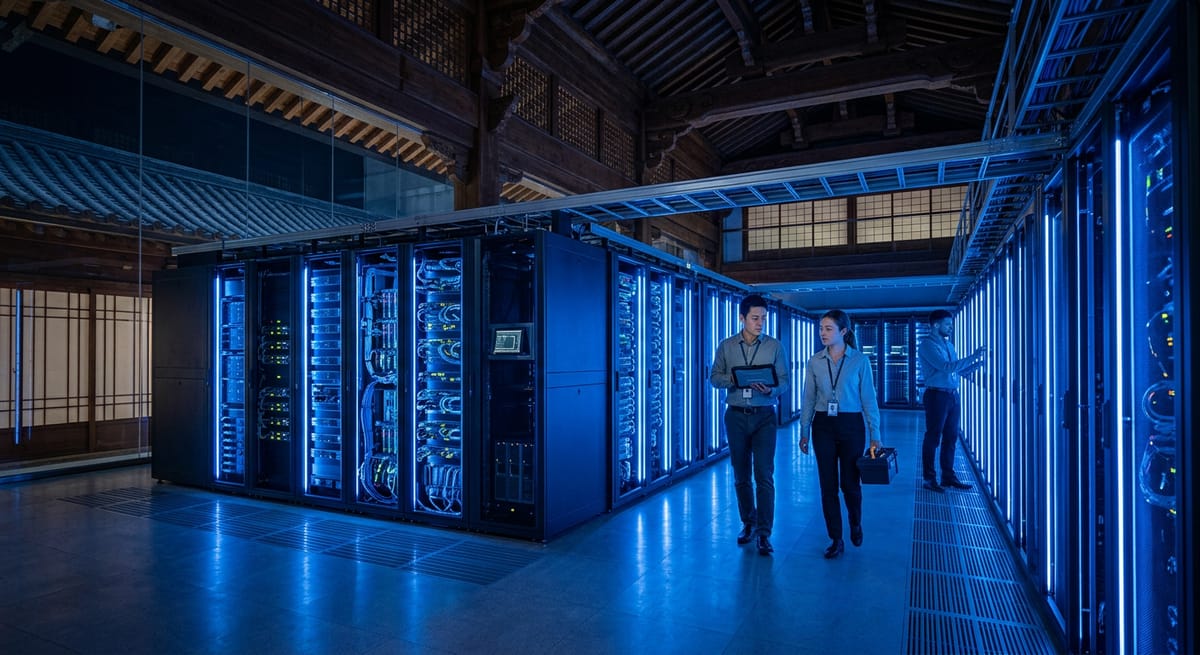
What is the South Korea AI proxy? It is the strategic investment approach of gaining artificial intelligence exposure through South Korean equity markets, bypassing overvalued US mega-caps. According to the Korea Customs Service, South Korean semiconductor exports surged 152% year-over-year in April 2026, solidifying the Asian nation's critical role as the undisputed backbone of global AI hardware infrastructure.
What Makes South Korea an Essential AI Investment Proxy?
South Korea has evolved into an essential artificial intelligence investment proxy because it controls the foundational hardware required to build modern AI data centers. While US mega-cap technology companies design software, South Korean manufacturers fabricate the memory components that allow these systems to function. A report by Citi Research in September 2025 indicated that the Bank of Korea expects AI-driven productivity to drastically raise equity targets.
Key reasons South Korea is the ultimate AI proxy include:
- Monopoly on Memory: Near-total control over global High Bandwidth Memory (HBM) production.
- Valuation Discount: Exposure to hyper-growth AI tech at fractions of Western P/E multiples.
- Infrastructure Dominance: Unmatched manufacturing scale for advanced AI server components.
For investors, allocating capital to South Korean equities provides direct exposure to the AI supercycle, offering a highly lucrative blend of hyper-growth technology with deeply discounted traditional value characteristics.
How Are South Korean Semiconductor Exports Performing in 2026?
South Korean semiconductor exports are experiencing unprecedented growth in 2026, driven by the insatiable global demand for artificial intelligence hardware. According to official data released by the Korea Customs Service on April 13, 2026, semiconductor export values skyrocketed by 152% year-over-year during the first ten days of April, reaching a staggering $8.6 billion. This specialized tech sector now accounts for 34% of the nation's total export shipments. This massive rebound comes after periods of previous macroeconomic weakness, clearly demonstrating how AI infrastructure spending has reversed the country's trade trajectory. Global chip buyers are aggressively securing supply lines for data center build-outs, which has triggered severe pricing power shifts favoring manufacturers. In fact, South Korea already set a historic milestone in 2025 by recording an all-time high of $173.4 billion in annual semiconductor exports. This robust trade momentum confirms that the underlying demand for AI memory chips is translating directly into spectacular national economic performance.
Why Is High Bandwidth Memory (HBM) Critical for AI Infrastructure?
High Bandwidth Memory (HBM) is critical for AI infrastructure because it fundamentally solves the data bottleneck between processing units and memory storage. Traditional memory chips cannot transfer data fast enough to keep up with the computational speeds of modern artificial intelligence accelerators like those produced by Nvidia or AMD. HBM addresses this constraint by vertically stacking memory chips and connecting them directly to the processor, dramatically increasing data transfer rates while simultaneously reducing power consumption. According to Introl (January 2026), standard memory is designed for acceptable latency, but AI requires maximum throughput to train neural networks efficiently. The AI memory supercycle has transformed the Total Addressable Market (TAM) for HBM, which is projected to reach $100 billion by 2028, representing a 40% compound annual growth rate from 2025. Without this advanced South Korean-manufactured memory technology, the rapid deployment of generative AI software and enterprise-level machine learning applications would be physically impossible to execute.
How Does SK Hynix Dominate the Global HBM Market?
SK Hynix dominates the global High Bandwidth Memory market through an insurmountable first-mover technological advantage and deep strategic partnerships with leading artificial intelligence chip designers. As of Q2 2025, Counterpoint Research data confirmed that SK Hynix commanded an overwhelming 62% market share in the HBM sector. The company successfully executed early bets on next-generation HBM3E technology, securing its position as the primary memory supplier for Nvidia's AI accelerators. By April 2026, SK Hynix shares breached the 1.1 million won mark, achieving an $80 billion market capitalization. This market dominance is supported by fully booked production capacity stretching completely through the end of 2026. Because SK Hynix consistently achieves higher manufacturing yields than its competitors, it reported a massive 58% operating profit margin in late 2025. By controlling the supply of this indispensable bottleneck component, SK Hynix has effectively transformed from a cyclical memory manufacturer into a structural growth pillar of the global AI economy.
What Is Samsung Electronics Doing to Reclaim AI Market Share?
Samsung Electronics is aggressively restructuring its memory division and accelerating its research and development pipelines to reclaim lost artificial intelligence market share. After experiencing qualification delays for its advanced chips with key buyers, Samsung temporarily fell behind SK Hynix in the premium memory segment. However, analysts at Counterpoint Research forecast a strong rebound as the battle pivots toward next-generation HBM4 chips in 2026. Samsung's sheer manufacturing scale allows it to project monumental financial recoveries; in April 2026, the company estimated a quarterly operating profit of 57.2 trillion won ($37.9 billion), representing an eightfold year-over-year increase driven primarily by surging memory chip prices. The company is actively pushing its advanced packaging solutions to attract global tech giants requiring integrated foundry and memory services. By leveraging its vast capital reserves and shifting traditional DRAM production lines to premium HBM lines, Samsung aims to capture a significant portion of the projected $100 billion HBM market by 2028.
How Does the KOSPI Index Correlate With Global AI Trends?
The KOSPI Index correlates highly with global artificial intelligence trends because memory semiconductor companies dictate the majority of the benchmark's total weighting and earnings growth. As a result, the South Korean stock market has effectively morphed into a leveraged play on global data center capital expenditures. During 2025, Bloomberg data revealed that the KOSPI index soared by an astonishing 76%, marking its best annual performance in a quarter-century. This massive outperformance was not driven by broad domestic economic strength, but rather by the explosive re-rating of AI proxy stocks like Samsung Electronics and SK Hynix. When US tech giants announce increased infrastructure spending for machine learning, the KOSPI immediately prices in higher forward earnings for its foundational chipmakers. However, this heavy tech concentration also introduces cyclical vulnerability; if global AI infrastructure deployment unexpectedly decelerates, the KOSPI's heavy reliance on semiconductor exports would likely trigger sharp index corrections regardless of domestic South Korean corporate governance improvements.
What Are the Best South Korean ETFs for Artificial Intelligence Exposure?
The best South Korean ETFs for artificial intelligence exposure provide investors with concentrated access to the primary semiconductor manufacturers driving the AI memory supercycle. The iShares MSCI South Korea ETF (EWY) is the most liquid vehicle, tracking the broader market but heavily weighted toward tech giants. According to The Motley Fool (April 2026), EWY generated a staggering 180% return since early 2025, largely because Samsung and SK Hynix comprise approximately 43% of its allocation. Alternatively, the Franklin FTSE South Korea ETF (FLKR) offers similar exposure with a highly competitive 0.09% expense ratio. While these index funds offer excellent tactical access, investors must acknowledge the inherent concentration risk.
| ETF Ticker | Fund Name | Expense Ratio | Key AI Holdings |
|---|---|---|---|
| EWY | iShares MSCI South Korea ETF | 0.59% | SK Hynix, Samsung Electronics |
| FLKR | Franklin FTSE South Korea ETF | 0.09% | SK Hynix, Samsung Electronics |
| AIQ | Global X AI & Tech ETF | 0.68% | Samsung Electronics (Global) |
Are South Korean Power Grid Stocks Benefiting From the AI Boom?
South Korean power grid and infrastructure stocks are massively benefiting from the artificial intelligence boom due to the unprecedented electricity demands of modern data centers. While memory chips receive the most media attention, AI processing requires immense and continuous energy supplies that traditional utility networks cannot support. As a result, secondary AI proxy trades have emerged in the industrial sector. According to Bloomberg (December 2025), South Korean power transformer manufacturer Hyosung Heavy Industries and nuclear energy provider Doosan Enerbility each saw their share prices skyrocket by more than 320% during the year. Analysts at Morgan Stanley emphasized that this multi-decade re-rating is driven by the absolute necessity of grid modernization and carbon-free nuclear alternatives to power AI facilities. Because there are no rapid workarounds for fundamental energy constraints, these South Korean electrical infrastructure companies have transformed into indispensable, high-growth industrial assets that offer investors a diversified method to play the global artificial intelligence expansion cycle.
How Do Government Policies Support South Korea’s AI Transformation?
Government policies are actively supporting South Korea's artificial intelligence transformation through massive fiscal stimulus, tax incentives, and strategic deregulation frameworks. In late 2025, President Lee Jae-myung’s administration unveiled a comprehensive economic strategy intended to triple AI-related state investments to 10 trillion won ($7 billion) by 2026. According to Citi Research (September 2025), this aggressive budget proposal expands research and development spending by 19% year-over-year. The South Korean government has identified 30 flagship AI transformation projects across corporate and public sectors, specifically targeting manufacturing, robotics, and semiconductor supply chains. To incentivize private sector participation, policymakers are offering lucrative tax credits for corporations building advanced data centers and relaxing zoning regulations to ensure adequate power supply infrastructure. By officially designating artificial intelligence as a critical matter of national security and economic survival, the South Korean government is actively constructing a highly favorable macroeconomic environment that drastically de-risks long-term capital investments in domestic technology equities.
What Are the Valuation Advantages of Korean Equities Versus US Tech?
The primary valuation advantage of South Korean equities versus US tech stocks lies in acquiring identical fundamental earnings growth at a deeply discounted purchase price. While American mega-cap technology companies often trade at premium price-to-earnings multiples exceeding 35x, South Korean AI proxy stocks historically trade at severe discounts due to geopolitical risks and unique corporate governance structures. According to Bank of America strategist Michael Hartnett (November 2025), investors can capture the exact same AI-driven earnings profile in international markets at two-thirds the cost of the S&P 500 on a P/E basis. Even after the KOSPI's historic 76% surge in 2025, fundamental valuations remain comparatively attractive because the underlying corporate profits of memory chip manufacturers have expanded exponentially. As the initial US-centric AI hype cycle matures into an earnings-focused reality, institutional capital is systematically rotating toward Asian markets where the financial upside is mathematically superior and the initial equity entry points provide a safer margin of safety.
How Does the AI Boom Impact the Historical Korea Discount?
The artificial intelligence boom is aggressively helping to dismantle the historical Korea Discount—a persistent phenomenon where South Korean equities trade at significantly lower valuations compared to global peers. For decades, investors penalized the KOSPI index due to opaque corporate governance by family-controlled conglomerates (chaebols) and poor shareholder return policies. However, the sheer profitability of the AI memory supercycle is forcing structural behavioral changes. In January 2026, SK Hynix announced it would utilize its record 58% operating margins to retire 12.2 trillion won worth of treasury stocks and allocate an additional 1 trillion won for shareholder dividends. Simultaneously, the South Korean government is pushing aggressive capital market reforms, mandating English-language disclosures, and proposing inheritance tax reductions to discourage controlling families from intentionally suppressing share prices. While the geopolitical threat of North Korea remains a permanent fixture, the massive influx of foreign capital demanding AI hardware exposure is organically forcing the market to adopt international governance standards.
How Does South Korea Compare to Taiwan as an AI Investment?
South Korea compares favorably to Taiwan as an AI investment proxy by offering broader industrial diversification alongside critical semiconductor exposure. While both Asian nations are foundational to the global artificial intelligence supply chain, their equity markets present different structural risk profiles. The Taiwan Stock Exchange (TAIEX) functions almost exclusively as a proxy for Taiwan Semiconductor Manufacturing Co. (TSMC), creating massive single-asset concentration risk for passive investors. In contrast, while the South Korean KOSPI is heavily reliant on memory chip titans SK Hynix and Samsung Electronics, it also features a robust secondary market of AI-adjacent beneficiaries. According to TradingKey (March 2026), South Korea offers exposure to globally dominant power transformer manufacturers, advanced nuclear energy providers, and defense contractors. Furthermore, South Korea's memory semiconductor market operates as an oligopoly with immense pricing power, whereas the broader Taiwanese hardware sector faces increasing competitive pressures from Chinese integrated circuit manufacturers pushing for sovereign technological self-sufficiency.
What Macroeconomic Risks Could Derail the South Korean AI Rally?
Several macroeconomic risks could potentially derail the ongoing South Korean AI equity rally, despite the underlying strength of the semiconductor supercycle. The most immediate threat is a potential deceleration in global data center capital expenditures; if American tech giants scale back their aggressive artificial intelligence infrastructure spending, South Korean memory chip exports would plummet instantaneously. Additionally, Forbes reported in December 2025 that South Korea faces a severe low-growth demographic trap, characterized by stagnant real wages, surging property costs, and sky-high household debt. Currency volatility also poses a significant danger, as the heavily export-dependent economy is sensitive to rapid fluctuations in the Korean Won and the US Dollar. Furthermore, an escalation in US-China trade wars under President Donald Trump in 2026 could disrupt complex Asian supply chains, imposing devastating tariffs on technology components. Consequently, international investors must vigilantly monitor both global AI spending trends and domestic Korean economic indicators to navigate these systemic vulnerabilities effectively.
How Can International Investors Capitalize on the South Korean AI Proxy Trade?
International investors can successfully capitalize on the South Korean AI proxy trade by utilizing a combination of targeted exchange-traded funds and disciplined macroeconomic monitoring. The most efficient entry point is the iShares MSCI South Korea ETF (EWY), which provides immediate, high-concentration exposure to the world’s leading High Bandwidth Memory manufacturers. For investors seeking active management, the South Korean financial market is experiencing a massive influx of specialized active ETFs. According to Evrim Ağacı (February 2026), firms like Mirae Asset and KB Asset Management are rapidly launching domestic active funds designed specifically to outperform passive tech benchmarks. To maximize this geopolitical arbitrage, portfolio managers should strategically overweight South Korean equities during periods of high global semiconductor demand while utilizing strict stop-loss orders to mitigate the inherent volatility of emerging markets. By acknowledging that AI software requires physical memory hardware, astute investors can continuously extract premium alpha from Seoul's technological dominance without overpaying for American equity valuations.
How Are Global Funds Reacting to South Korea's Market Upgrades?
Global funds are reacting to South Korea's market upgrades by rapidly reallocating institutional capital away from overbought American tech equities and into the KOSPI index. International asset managers recognize that Seoul's ongoing capital market reforms could soon trigger a formal reclassification of South Korea from an "emerging market" to a "developed market" by index provider MSCI. According to TradingKey (March 2026), a successful MSCI upgrade could automatically trigger between $20 billion and $40 billion in passive foreign inflows as global index funds rebalance their global weightings. This massive wall of liquidity would disproportionately benefit the large-cap AI semiconductor stocks that dominate the Korean exchange. Furthermore, as the US Dollar weakened in early 2026, foreign investors discovered that purchasing South Korean assets provided highly favorable foreign exchange currency returns. Consequently, global hedge funds are no longer treating South Korea as a cyclical emerging market trade, but rather as a core structural allocation for the artificial intelligence era.
Related ClaritX Tools
To maximize your returns in the Asian semiconductor market and discover the best international AI proxy trades, leverage our advanced analytics:
- → Run a full 9-perspective AI analysis on any stock
- → AI Stock Rankings for 1,000+ assets
- → Portfolio Simulator (risk-profile based)
Disclaimer: This content is for educational and informational purposes only and does not constitute investment advice. Always consult a licensed financial professional before making any investment decisions.
Sources
How this content was created
This article was created by the ClaritX Research Engine — an AI system that analyzes and cross-checks information from reliable, named sources (listed above). Published . Found an error? Report it — see our editorial policy and corrections process. Educational content only — not investment advice (full disclaimer).