Iran Post-Epic Fury: Unpacking the 2026 Middle East Escalation
By ClaritX Research Team ·
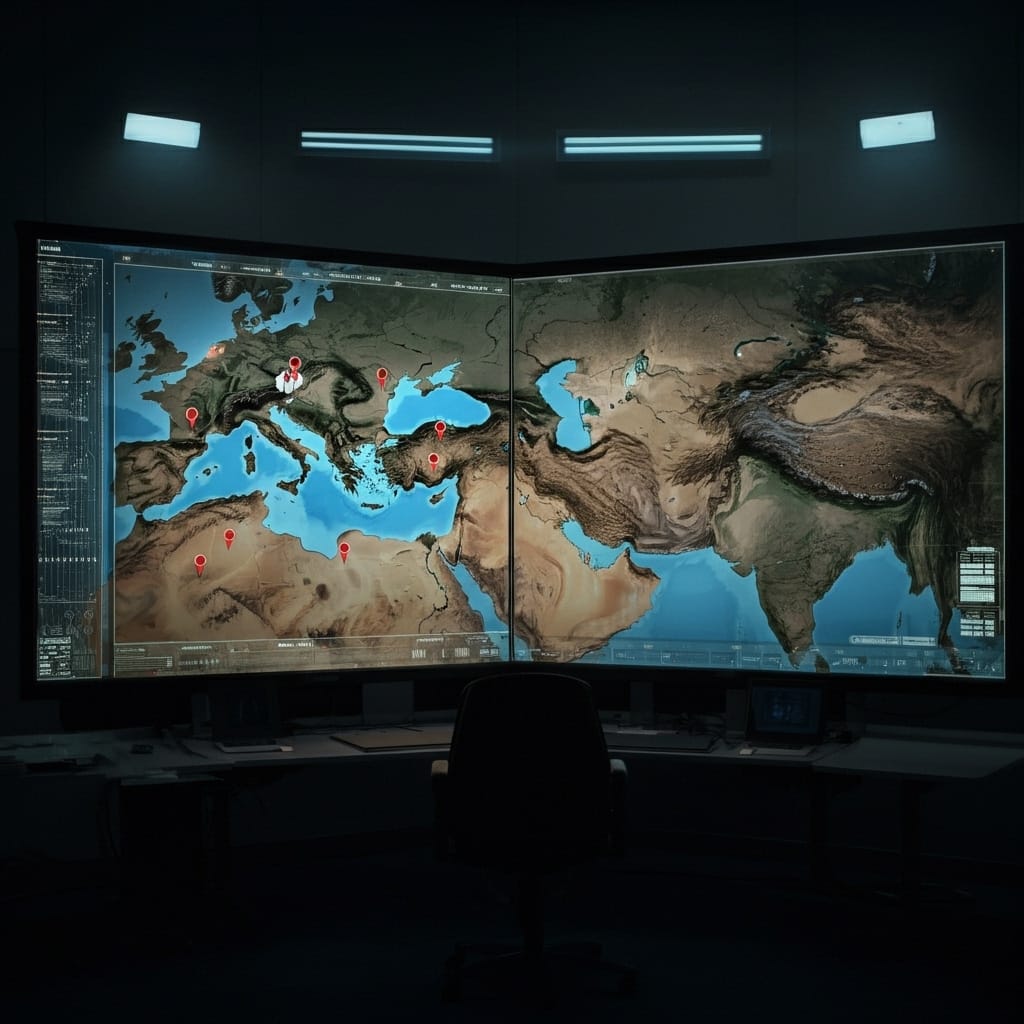
The Dawn of Operation Epic Fury
On February 28, 2026, the geopolitical landscape of the Middle East shifted dramatically when the United States and Israel launched a massive, coordinated military campaign against the Islamic Republic of Iran. Dubbed "Operation Epic Fury" by the U.S. and "Operation Roaring Lion" by Israel, the strikes began at 1:15 AM EST, aiming to systematically dismantle Iran's military capabilities.
The operation marks a drastic escalation from the June 2025 "Operation Midnight Hammer," which was limited to targeted strikes on key nuclear facilities such as the Fordow Fuel Enrichment Plant. In contrast, Operation Epic Fury was explicitly designed to eradicate Iran's ballistic missile infrastructure, annihilate its naval fleet, permanently deny the nation nuclear weapons, and decisively crush its regional proxy networks.
Decapitation of Leadership and Military Infrastructure
The opening salvos of Operation Epic Fury were unprecedented in scale. In the first few hours, an initial wave of precision munitions from air, land, and sea struck Islamic Revolutionary Guard Corps (IRGC) command centers, air defenses, and missile launch sites.
Perhaps the most monumental development occurred on the first day of the campaign: a strike on a compound in Tehran reportedly resulted in the death of Iranian Supreme Leader Ayatollah Ali Khamenei. This decapitation strike threw the regime into chaos while dismantling its centralized command architecture.
By the second week of the campaign, U.S. Central Command (CENTCOM), under the direction of Adm. Brad Cooper, had struck over 5,000 targets. According to Chairman of the Joint Chiefs of Staff Gen. Dan Caine, the U.S. military made "substantial progress" in neutralizing the Iranian Navy, sinking more than 50 naval vessels, including a prominent drone carrier ship, and actively hunting down mine-laying vessels.
The Cost of "Laser-Focused" Warfare
The financial and human cost of such an overwhelming projection of power is significant. A report from the Center for Strategic and International Studies (CSIS) estimated that the first 100 hours of Operation Epic Fury alone cost the U.S. approximately $3.7 billion.
Tragically, the conflict has not been without American casualties. Reports indicate that at least 13 U.S. service members have been killed—seven in Iranian retaliatory strikes and six in an incident involving refueling aircraft—with nearly 170 others sustaining minor injuries.
Despite these losses, U.S. Secretary of War Pete Hegseth characterized the operation as "laser-focused," emphasizing that the U.S. has no intentions of engaging in an endless nation-building quagmire. The strategy relies on overwhelming air superiority; as Hegseth noted during a March 10 press briefing, the U.S. continued to ramp up sorties while Iran's retaliatory missile capabilities were reduced to their lowest operational levels. Furthermore, Iranian one-way attack drone assaults dropped by 95% nearly two weeks into the operation.
The Looming Cyber Threat
With conventional and nuclear ambitions in ashes, cybersecurity experts are warning of intense asymmetric retaliation. Cyber threat intelligence indicates a high risk from Iranian advanced persistent threat (APT) groups like Pioneer Kitten. Analysts believe that these groups, known to pre-position access within U.S. critical infrastructure, may activate destructive wiper attacks as a final recourse for a regime scrambling to respond. Compounding this threat is the fact that the U.S. Cybersecurity and Infrastructure Security Agency (CISA) is currently operating with a significant staffing gap, elevating the risk environment.
What Comes Next?
As Operation Epic Fury progresses, the traditional Iranian "axis of resistance" appears fractured, with proxy groups like Hezbollah and the Houthis largely marginalized or sidelined. Iran finds itself isolated, with neighbors and former Gulf allies distancing themselves from Tehran's desperate attempts to launch missiles from civilian-populated areas.
The outcome of this historic campaign remains to be seen, but one thing is certain: the Iran that emerges post-Epic Fury will be fundamentally altered, stripped of its conventional deterrence, and reeling from the loss of its highest-ranking leaders.
Sources
- Operation Epic Fury and the Remnants of Iran's Nuclear Program - CSIS
- Hegseth Says U.S. Attacks Intensify Under Epic Fury, While Iranian Responses Slow
- U.S. Forces Launch Operation Epic Fury - CENTCOM
- Iran's drone assaults 'down 95%' as Hegseth declares Operation Epic Fury is still 'ramping up' - DefenseScoop
How this content was created
This article was created by the ClaritX Research Engine — an AI system that analyzes and cross-checks information from reliable, named sources (listed above). Published . Found an error? Report it — see our editorial policy and corrections process. Educational content only — not investment advice (full disclaimer).