Inflation's Last Stand? How 'Sticky' Services and Wage Growth Could Force the Fed's Hand in Q2 2026
By ClaritX Research Team ·
Inflation's Last Stand? How 'Sticky' Services and Wage Growth Could Force the Fed's Hand in Q2 2026
The market has spent the better part of two years anticipating a decisive end to the post-pandemic inflation surge, but as we move into the second quarter of 2026, the final chapter has yet to be written. While headline inflation has cooled from its scorching peaks, a stubborn undercurrent of price pressures, particularly in service-based sectors, coupled with robust wage growth, presents a complex challenge for the Federal Reserve. This has led to a critical standoff: a strong labor market pushing wages and demand higher, clashing with the Fed's mandate to restore price stability. For investors, this environment is fraught with uncertainty. Will the Fed hold rates steady, hoping inflation will recede on its own, or will it be forced to initiate another round of hikes, potentially jeopardizing economic growth?
The answer to this question will likely define market performance in the latter half of the year. Understanding the nuances of this inflationary environment is not just an academic exercise; it is essential for stress-testing portfolios and making informed investment decisions. In practice, investors often find that periods of Fed-induced uncertainty can lead to significant volatility. This article will dissect the key economic data, explore the Fed's dilemma, and provide actionable strategies for positioning your portfolio for what may come.
Understanding the Inflation Landscape in Early 2026
After a period of moderation, recent data has painted a more complicated picture of inflation. The Consumer Price Index (CPI) has shown that while goods inflation has largely dissipated, services inflation remains stubbornly high. This "sticky" inflation is less susceptible to interest rate hikes because it's driven by factors that are slower to change, primarily wages. According to the Bureau of Labor Statistics, the services sector, which includes everything from housing and healthcare to hospitality and transportation, has been the primary driver of core inflation in early 2026. For instance, a recent report highlighted that while the headline CPI for January 2026 was a relatively tame 3.1%, the services component was up 5.4% year-over-year.
This stickiness is largely a byproduct of the tight labor market. With unemployment holding near historic lows, businesses are competing for a limited pool of workers, which pushes wages higher. Data from the first quarter of 2026 shows average hourly earnings rising at an annualized rate of 4.5%, outpacing headline inflation. While this is good news for workers, it creates a potential wage-price spiral, where higher wages lead to higher operating costs for businesses, which are then passed on to consumers in the form of higher prices. This, in turn, leads to demands for even higher wages.
The Fed's Dilemma: Balancing Inflation and the Labor Market
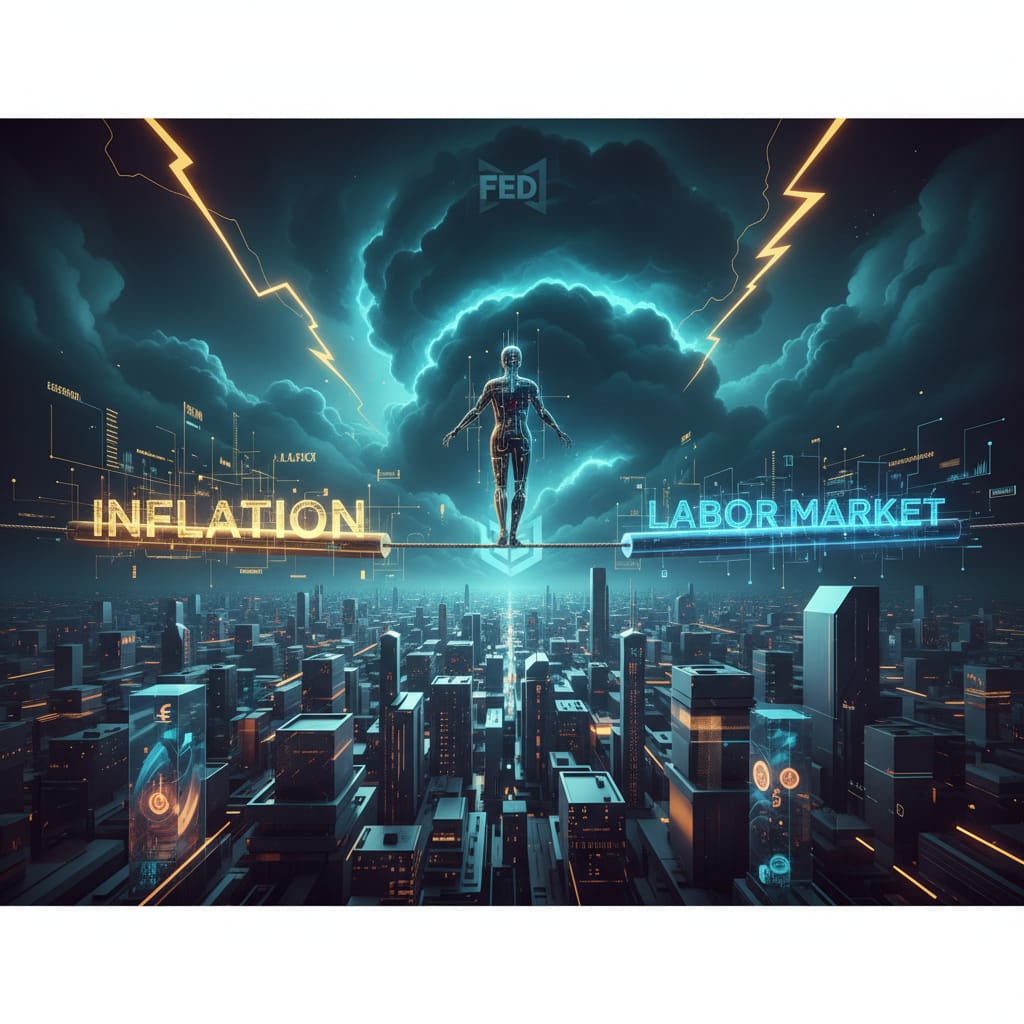
The Federal Reserve is now caught between a rock and a hard place. Its dual mandate is to promote maximum employment and stable prices. For the past year, it has been attempting a "soft landing" – bringing inflation back to its 2% target without triggering a recession. However, the persistence of services inflation and the strength of the labor market are testing this strategy. A common mistake is to assume the Fed has a crystal ball; in reality, it is reacting to data as it comes in. The "higher for longer" interest rate environment has been the Fed’s primary tool for taming inflation, but the central bank is hesitant to push rates so high that they cripple the economy and lead to widespread job losses.
Recent statements from Federal Reserve officials have reflected this cautious stance. While they have acknowledged the progress made in fighting inflation, they have also emphasized that the job is not yet done. The minutes from the March 2026 Federal Open Market Committee (FOMC) meeting revealed a divided committee, with some members expressing concern that elevated wage growth could entrench inflation, while others argued that the current policy stance was sufficiently restrictive. The consensus, for now, seems to be a "wait-and-see" approach, but the Fed has been clear that it will not hesitate to act if inflation re-accelerates. As one Fed governor noted in a recent speech, "We are in a data-dependent mode, and all options are on the table for our next meeting."
How Investors Can Prepare: Stress-Testing Your Portfolio with ClaritX
Given the uncertainty surrounding the Fed's next move, a passive approach to portfolio management may not be sufficient. This is where tools like ClaritX's Portfolio Simulator can be invaluable. This tool allows investors to model how their current holdings might perform under a variety of macroeconomic scenarios, including different interest rate paths. For example, an investor might run a simulation to see how their portfolio would be impacted by a 25-basis-point or a 50-basis-point rate hike in the second quarter. The simulator can provide a visual representation of the potential upside and downside, helping investors to identify areas of concentrated risk in their portfolios.
For instance, an investor with a portfolio heavily weighted in technology and other growth stocks, which are typically more sensitive to interest rate changes, might find that a simulated rate hike leads to a significant decline in their portfolio's value. Conversely, a portfolio with a higher allocation to value stocks, dividend-paying companies, and sectors that are less sensitive to economic cycles might show more resilience. By running these stress tests, investors can make more informed decisions about whether to reallocate their assets to better align with their risk tolerance and market outlook.
Here’s a table summarizing sectors that are historically vulnerable to persistent inflation and a rising rate environment, and those that may benefit from the current economic conditions:
| Sectors Vulnerable to Inflation/Rate Hikes | Sectors That May Benefit or Be Resilient |
|---|---|
| Growth & Tech Stocks: These companies' valuations are often based on future earnings, which are discounted at a higher rate when interest rates rise. | Consumer Staples: Companies that produce essential goods like food and household products tend to have stable demand regardless of the economic climate. |
| Real Estate: Higher interest rates make borrowing more expensive, which can cool demand for property and negatively impact real estate investment trusts (REITs). | Energy: Energy companies often benefit from inflation, as rising prices can lead to higher revenues and profits. However, this sector is also subject to geopolitical risks. |
| Utilities: While often considered defensive, utilities can be sensitive to interest rate hikes due to their high dividend yields and capital-intensive nature. | Healthcare: Demand for healthcare is generally inelastic, making this sector relatively resilient during economic downturns. |
| Automobiles & Durables: High-ticket consumer items are often financed, so higher interest rates can dampen demand. | Financials: Banks and other financial institutions can benefit from a higher interest rate environment, as it can increase their net interest margins. |
| Construction: Similar to real estate, the construction sector is sensitive to borrowing costs and the overall health of the economy. | Materials: Companies that produce raw materials can benefit from inflation, but they are also cyclical and dependent on global demand. |
Actionable Strategies for Investors
Beyond stress-testing, investors can also use advanced tools to identify specific companies and sectors that are well-positioned for the current environment. ClaritX's AI Stock Rankings, for example, can help to surface companies that have historically shown resilience to inflation or have characteristics that might allow them to benefit from rising wages.
This multi-angle AI analysis looks beyond simple metrics to evaluate companies on a wide range of factors, including their pricing power, operating efficiency, and ability to manage rising labor costs. For example, the AI might identify a consumer staples company that has a strong brand and a history of successfully passing on cost increases to consumers. Or it might highlight an industrial company that is a leader in automation, allowing it to mitigate the impact of rising wages on its bottom line.
Here are a few examples of companies that the ClaritX AI Stock Rankings might flag in the current environment:
- A consumer staples giant like Procter & Gamble (PG): The AI might flag PG for its strong brand portfolio, which gives it significant pricing power. The company has a long history of navigating inflationary periods by adjusting its prices and product mix. A multi-angle analysis would likely show strong fundamentals, positive sentiment, and a relatively low beta, indicating lower volatility than the broader market.
- An industrial automation leader like Rockwell Automation (ROK): As companies look to offset rising labor costs, the demand for automation solutions is likely to increase. The AI might identify Rockwell as a key beneficiary of this trend, given its strong market position and innovative product lineup. The analysis might also point to strong earnings growth and positive analyst ratings.
- A well-managed financial institution like JPMorgan Chase (JPM): While the financial sector can be complex, a well-diversified bank like JPMorgan may be poised to benefit from a higher interest rate environment. The AI would likely analyze the bank's net interest margin, loan growth, and overall financial health to assess its resilience.
These are just a few examples, and it's important to remember that no investment is without risk. Historical patterns suggest that even well-positioned companies can be impacted by broader market downturns. The key is to use these tools to conduct thorough research and build a diversified portfolio that aligns with your long-term financial goals.
Conclusion: Navigate Uncertainty with ClaritX
The current economic environment is one of the most complex that investors have faced in years. The push and pull between a strong labor market and persistent inflation has created a delicate balancing act for the Federal Reserve, and the outcome of its policy decisions will have a significant impact on financial markets. While it is impossible to predict the future with certainty, investors are not powerless. By leveraging advanced tools like the ClaritX Portfolio Simulator and AI Stock Rankings, it is possible to gain a deeper understanding of the risks and opportunities in the current market.
In practice, investors who take a proactive approach to portfolio management are often better equipped to navigate periods of uncertainty. Rather than reacting to market swings, they can use data-driven insights to make informed decisions and position their portfolios for a range of potential outcomes. A common mistake is to chase performance or make emotional decisions based on short-term market noise. A more prudent approach is to focus on building a resilient portfolio that is designed to weather different economic seasons. As we move further into 2026, the ability to analyze the market from multiple angles and stress-test your assumptions will be more important than ever.
Further Reading
---
This content is for educational purposes only and does not constitute investment advice. Past performance does not guarantee future results. All investments carry risk of principal loss. Always conduct your own research and consider consulting a qualified financial advisor before making investment decisions.
Sources
How this content was created
This article was created by the ClaritX Research Engine — an AI system that analyzes and cross-checks information from reliable, named sources (listed above). Published . Found an error? Report it — see our editorial policy and corrections process. Educational content only — not investment advice (full disclaimer).