AI Hallucinations in Financial Data: A Growing Concern
By ClaritX Research Team ·
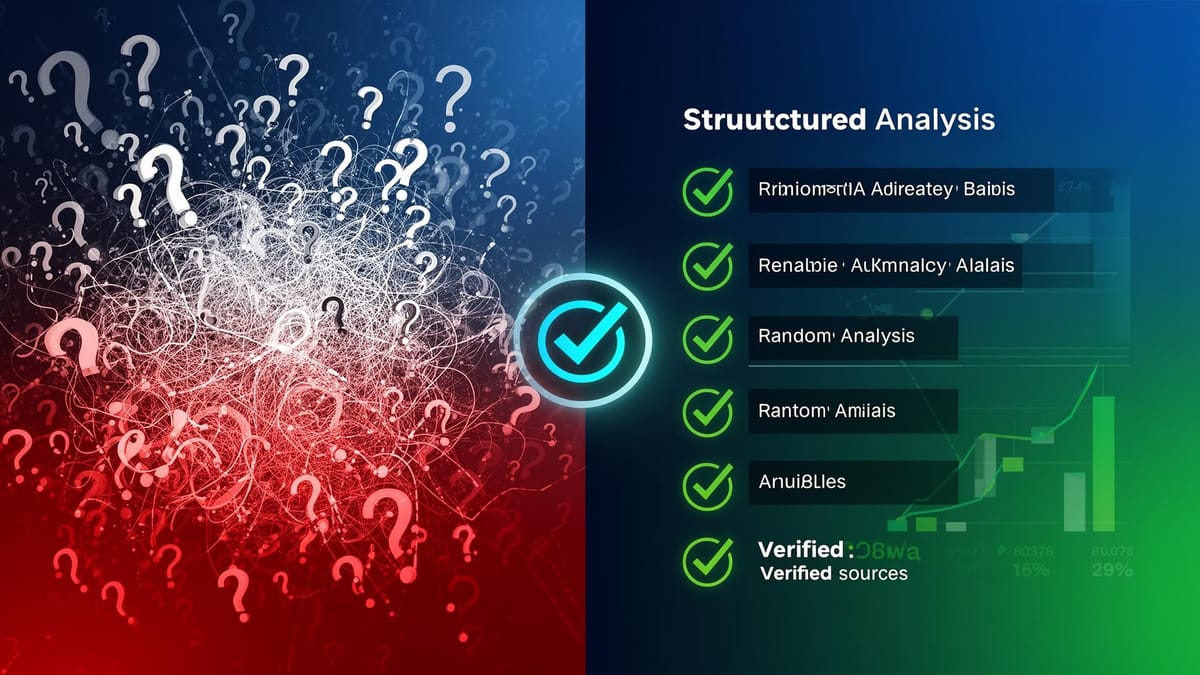
The Silent Threat: AI Hallucinations in Finance
You ask an AI chatbot: "What was Apple's revenue last quarter?" It responds confidently with a specific number, complete with percentage growth and comparison to analyst estimates. It sounds authoritative. It's presented as fact. And it might be completely wrong.
This phenomenon—AI confidently presenting false information as truth—is known as hallucination, and it's one of the most dangerous aspects of using general-purpose AI for financial analysis.
What Causes AI Hallucinations?
Large Language Models (LLMs) like GPT-4, Claude, and others don't actually "know" facts. Instead, they predict what text should come next based on patterns learned during training. When asked about specific financial data:
- Training data gaps: The model may not have been trained on the specific information
- Outdated information: Training data has cutoff dates, sometimes months or years old
- Pattern matching: The AI generates plausible-sounding responses based on similar patterns
- No fact-checking: There's no built-in mechanism to verify accuracy
Real Examples of Financial Hallucinations
Case 1: Fabricated Earnings An investor asked ChatGPT about a mid-cap company's earnings. The AI provided detailed figures—quarterly revenue, EPS, YoY growth—all of which were fabricated. The real earnings hadn't even been released yet.
Case 2: Non-Existent Acquisitions A user queried about a tech company's recent acquisitions. The AI confidently described an acquisition that never happened, including fabricated deal terms and strategic rationale.
Case 3: Invented Analyst Ratings When asked about analyst opinions on a stock, an AI provided specific price targets and ratings from named analysts—none of which existed in any financial database.
The Consequences for Investors
When investors act on hallucinated information, the results can be devastating:
- Wrong entry/exit points based on fictional technical levels
- Misguided fundamental analysis using made-up financial metrics
- False confidence in investment decisions
- Missed risks when AI fails to mention real concerns
- Portfolio losses from decisions based on fiction
How to Protect Yourself
1. Verify Every Claim
Never trust AI-generated financial data without cross-referencing against official sources like SEC filings, company investor relations, or established financial platforms.
2. Use Specialized Tools
Platforms designed for financial analysis (like ClaritX) connect to verified data sources rather than relying on training data. This eliminates the hallucination risk for factual information.
3. Ask for Sources
When using AI, always ask for sources. If the AI can't provide verifiable sources, treat the information with extreme skepticism.
4. Understand Limitations
Know what AI can and cannot do well:
- ✅ Explaining concepts and methodologies
- ✅ Comparing general investment strategies
- ✅ Summarizing publicly available information (with verification)
- ❌ Providing real-time market data
- ❌ Accurate specific financial metrics
- ❌ Breaking news and recent developments
The ClaritX Difference
ClaritX was built specifically to address the hallucination problem in financial AI. Our approach:
- Real-time data integration: Direct connections to market data providers
- Source transparency: Every data point is traceable to its origin
- Verification layers: Multiple checks ensure accuracy before display
- Clear limitations: We tell you exactly what we know and don't know
When our AI provides analysis, it's based on verified, current data—not pattern-matched predictions from training data.
The Bottom Line
AI hallucinations aren't just a technical curiosity—they're a real threat to investor portfolios. Understanding this limitation is the first step to using AI tools safely and effectively.
The future of investment research combines AI's analytical power with verified data sources and human oversight. That's not just our philosophy—it's the only responsible approach to AI-powered finance.
Related Reading
→ Hidden Dangers of AI Stock Analysis - More AI pitfalls to avoid
→ Multi-Angle Analysis Explained - The solution to single-source risk
→ AI Stock Screener Comparison - Find tools that use verified data
Try Hallucination-Free AI Analysis
→ Explore AI Stock Rankings - See verified, real-time data analysis in action
→ Build Your Portfolio - Create a risk-assessed portfolio simulation
---
This article is for educational purposes only and does not constitute financial advice. Always verify financial information through official sources before making investment decisions.
How this content was created
This article was created by the ClaritX Research Engine — an AI system that analyzes and cross-checks information from reliable, named sources. Published . Found an error? Report it — see our editorial policy and corrections process. Educational content only — not investment advice (full disclaimer).